Bér Andesite Slide and Stone Sea
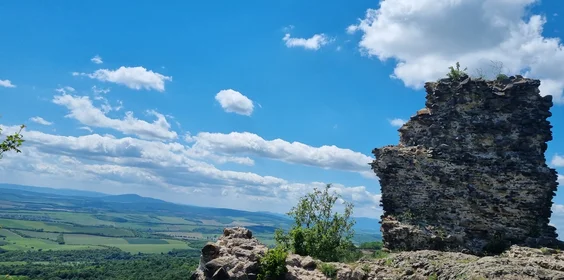
Nestled among the hills of the Cserhát region, near the village of Bér, lies one of the most spectacular and scientifically significant sites of the Novohrad-Nógrád Geopark. The unique rock formation, known as the 'andesite slide,' offers excitement not only for geologists but also provides a breathtaking sight for nature enthusiasts.
- Free outdoor parking available
How was the andesite slide formed?
The formation visible on the side of Nagy Hill in Bér was created approximately 18-19 million years ago as a result of Miocene volcanic activity. During the volcanic eruption, andesite lava pushed towards the surface and began to cool either just below or near the surface. As the lava cooled, its volume decreased, causing stress within the material. This led to the formation of columnar joints along the rock mass.
What makes Bér unique worldwide is the curved shape of the columns: the andesite columns, which formed perpendicular to the cooling surface, bent due to changes in the direction of cooling, resulting in the current structure that resembles a curved 'waterfall' or 'slide.' Later, erosion and quarrying removed the sediment covering the rock, revealing this rare geological feature.
Geological significance and rarity
The Bér andesite slide is of exceptional geological significance because this type of curved, columnar andesite formation is rare not only in Europe but globally (similar formations are more commonly seen in basalt, such as at nearby Somoskő). Beneath the 8-10 metre high curved columns lies a vast stone sea. This stone sea is the result of frost weathering during the Pleistocene: water freezing in the cracks of the rock during the ice ages caused the rock to fracture, creating the massive andesite blocks that now cover the hillside.
Connection to sustainability and the geopark philosophy
As part of the Novohrad-Nógrád Geopark, the Bér site serves as a model for sustainable tourism and geoconservation. Sustainability is reflected here on multiple levels:
-
Education and awareness: The educational trails help visitors understand the Earth's past, fostering a greater sense of responsibility towards nature.
-
Geotourism: Visiting the site has a low ecological footprint, supports the economic sustainability of local communities, and does not require destructive infrastructural interventions.
-
Preservation of values: Following the cessation of mining, the area's rehabilitation and designation as a protected site ensure that this heritage, shaped over millions of years, remains intact for future generations.
- Editorial Content -
Target group
-
Class trips
-
Families with younger children
-
Families with older children
-
Multigenerational programs
-
Friends
-
Seniors
-
Couples
Other services
Sights, programs
Parking information
- Free outdoor parking available