Székely Border Guard Memorial Centre
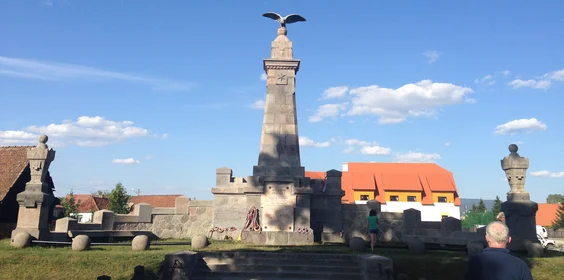
The Székely Border Guard Memorial Centre opened in August 2021 in Frumoasa, Harghita County, and is one of Transylvania's most significant military and historical museums. Its purpose is not only to commemorate but also to educate, foster dialogue, and strengthen shared identity. The exhibition presents a lesser-known yet highly important chapter of Székely history – the centuries-old institution of the Székely border guards, which was simultaneously a military, social, and cultural system.
- Cash
- Bank card accepted
- Free outdoor parking available
Who were the Székely border guards?
The Székely people held a unique position in the society of the Kingdom of Hungary: since the Middle Ages, they lived as a community enjoying collective noble rights and bound by military service on the eastern frontier of Transylvania. Their duty was to guard the border system and protect the eastern gates of the country – not as a professional army, but as a free community with their own leaders and internal legal system.
From the 18th century, especially under Maria Theresa and Joseph II, the Székely border guard officially became part of the Habsburg Monarchy's border defence system. This was when the Székely border guard regiments were established, such as the Székely Border Guard Infantry Regiment (1762). Although many protested against state intervention – the famous Siculicidium (1764) being a consequence of this – the role of the border guard ultimately shaped the organisation, education, religious, and economic life of Székely villages for a long time.
The Székely border guards participated in the Napoleonic Wars (e.g., the Battle of La Rothière), the Revolution of 1848–49, and even in the First and Second World Wars. Their history is therefore not only of local significance but is also an integral part of European military history.

The exhibition: an immersive journey into the past
The three-storey building housing the Székely Border Guard Memorial Centre uses modern, interactive tools, Hungarian–Romanian–English audioguides, period artefacts, and detailed graphic materials to showcase:
-
the Székely military organisation, weaponry, and ranks
-
everyday life on the borderlands
-
famous Székely battles and military leaders
-
the history of the professional Székely border guard after 1762
-
the relationship between community life and military service
-
the military aspects of Székely folk costumes, music, architecture, and education
During the visit, guests not only receive information but also become part of the story: the different floors are thematically arranged, offering deeper insights step by step.

Why is it important to talk about this today?
The history of the Székely border guard connects collective identity with responsibility. The exhibition is not about warfare but about community order, self-organisation, and conscious national existence. This form of remembrance is not only focused on the past but also expresses a commitment to the future – something particularly important in today's rapidly changing global world, where regional roots and role models need to be reaffirmed.
The centre also serves an educational purpose: museum education sessions are held for school groups, and community events are also organised.

Sustainable, community-based remembrance
The museum is operated by the local “Szépvízért Association” with community support and local dedication. The exhibition is part of a service that brings the region's cultural heritage to life, complemented by educational programmes. Museum education sessions are organised for school groups.
Why is it worth visiting?
-
A uniquely rich presentation of the history and everyday life of the Székely border guard.
-
Hungarian, Romanian, and English audioguides ensure universal access to the content.
-
An experience where visitors not only observe the past but also immerse themselves in the community's identity and history.
- editorial content -
Target group
-
Class trips
-
Seniors
-
Families with older children
-
Multigenerational programs
-
Friends
-
Couples
Other services
Sights, programs

Parking information
- Free outdoor parking available
Sustainability status report
The values shown here come from I-DEST's internal self-assessment system, which shows the progress of a service provider or location in various areas of sustainability. These are not rating scores, but rather informative feedback to support improvement. Food and products
 Caring for people
 Decent employment
 Pollution reduction
 Caring for the climate
 Waste reduction
 Caring for water
 Caring for nature
 Caring for culture
 Management and information