Village Museum, Biharugra
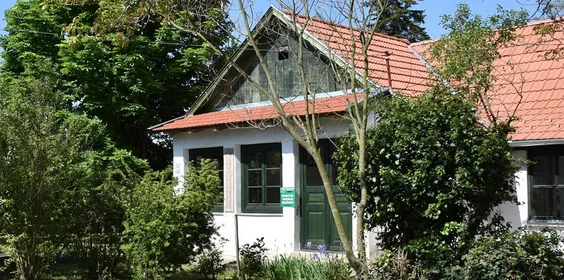
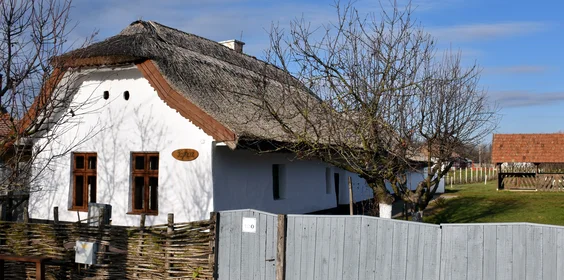
Located in the centre of Biharugra, halfway between the Bölöny Mansion and the Reformed Church, stands one of the village's oldest buildings.
- Parking available
More information
Only the remnants of the monastery walls found in the base of the church nave are older than this building. It once served as the manor house for the local landowning family until the Bölöny Mansion was built directly opposite. After that, it lost its original function, was converted into a granary, and was no longer used as a residential building. The building was originally larger in size than what remains today. This is evidenced by wall remnants unearthed during various groundworks next to the building on the northern side. On the 1885 cadastral map, it is already marked with its current layout as an agricultural building. Like other properties within the village boundaries, this building was also sold by József Bölöny in the early 20th century. It continued to function as a granary and was owned by Futura and later, after World War II, by the Grain Trading Company. After the regime change, entrepreneur József Máté purchased the building, which had once again lost its function. It stood empty and unused for many years until the owner decided in 2009 to hand it over to the village for use for 100 years. This allowed the village to create a fitting home for the Village Museum.
The first room of the building features a recreation of a room-kitchen-pantry setup typical of the early 20th century, aiming to capture the atmosphere of the time. Here, you can find a bed, cradle, chest, rocking chair, table, built-in stove, utensils, ceramic jugs, glasses, bowls, and pantry-related items (oil jug, troughs, cabbage barrel, cheese press, tobacco cutter, baking paddles, etc.).
The second room showcases everyday tools and equipment. Here, you can see items used daily by rural peasants, including some very interesting and lesser-known objects: for example, a clapper, which functioned as a simple seed drill, a hay cutter, a straw puller, a water grinding wheel, a goose feeder, and more. Tools related to hemp processing are also displayed here: the breaker, combs, spinning wheels, winders, and a loom, which visitors often enjoy trying out. In one corner, there are fishing-related items: fish-keeping nets, casting nets, fish baskets, waders, scales, an ice pick, and photos depicting the past and present of the Fishery.
Opposite the entrance is the largest room of the Village Museum, which also hosts temporary exhibitions in line with the museum's identity. Currently, it houses a wall hanging exhibition, which is regularly updated thanks to the growing number of donors. Some pieces from the carpet exhibition, which also enriches the museum's collection, are still on display. In this room, three glass display cases hold various objects, the most popular being the collection of old coins, antique books, hymnals, calendars, and a picture depicting the coats of arms of the 64 counties. A harmonium from the early 20th century was donated to the museum by the Baptist Church. There is also an old sideboard, a bench or rocking chair, which many visitors enjoy resting on during their visit.
Old clothes are also displayed here, which visitors love trying on and taking photos in.
The next room, named the '50s Room' by visitors, reflects the atmosphere of the 1950s. The double bed, two wardrobes, bedside table, mirror, chair, and table evoke memories of our grandmothers. The same nostalgic feeling is captured in the kitchen area with its old stove, stool, washbasin stand, laundry chest, and the kitchen cabinet filled with utensils, lard jars, and cans.
Sewing machines, tapestry pictures, a portrait of King Matthias, a wall mirror, a statue of a lady, suitcases on top of a wardrobe, and old radios can also be found here. The museum also displays uniforms donated to it, including those of a dam guard, policeman, and soldier.
The Village Museum, created through the voluntary donations of the people living in the village, holds a wealth of treasures. Even visitors from farther afield have contributed to the collection, either during subsequent visits or through intermediaries.
At the entrance to the cellar, in a prominent position, is the approximately 240-year-old entrance door of the local Reformed Church, which was donated to the museum by the Reformed Church.
Various tools and objects are also displayed on the exterior walls of the Village Museum (e.g., wooden pitchforks, cow yokes, drying baskets, small troughs, baking paddles, thistle cutters, soap-making spoons, etc.).
Target group
-
Class trips
-
Families with younger children
-
Families with older children
-
Seniors
-
Friends
Other services
Sights, programs
Parking information
- Free outdoor parking available
Sustainability status report
The values shown here come from I-DEST's internal self-assessment system, which shows the progress of a service provider or location in various areas of sustainability. These are not rating scores, but rather informative feedback to support improvement. Food and products
 Caring for people
 Decent employment
 Pollution reduction
 Caring for the climate
 Waste reduction
 Caring for water
 Caring for nature
 Caring for culture
 Management and information