International Eco-Certification Guide: How to Navigate Global Green Standards?
You've probably come across a little green leaf or a 'sustainable' label while booking accommodation. In July, right in the middle of the summer peak season, we’re especially inclined to rely on these, but what lies behind them?
Nowadays, as the majority of travellers actively seek eco-friendly options, accommodation marketers have quickly caught on. As a result, greenwashing – where a hotel or destination appears far more sustainable than it actually is – has become increasingly common. If a hotel swaps out its light bulbs or asks guests to reuse towels, that's a great first step, but it doesn’t make the place truly sustainable on its own. The key lies in independent, third-party verification, but navigating the hundreds of eco-labels on the market is no easy task.
The Global Benchmark: What is the GSTC and Why is it the Foundation?
To understand the world of green certifications, you need to know the main global reference point: the GSTC, or the Global Sustainable Tourism Council. The GSTC is an independent organisation supported by the UN, which doesn’t directly certify hotels but sets global minimum standards. Think of it as the constitution of sustainable tourism.
The GSTC criteria are built on four main pillars: sustainable management, social and economic impacts (supporting local communities), cultural heritage protection, and environmental impacts (resource management, pollution reduction). When you see an eco-label marked as 'GSTC-Recognized' or 'GSTC-Accredited', it means the certification system meets this highest global standard. It’s the most reliable shield against greenwashing, no matter where you travel in the world.
The European Gold Standard: EU Ecolabel
Within Europe, one of the strictest and most reliable labels you can encounter is the EU Ecolabel, whose logo features a small green-stemmed flower surrounded by EU stars. This certification is managed by the European Commission and is only awarded to tourism services (hotels, campsites) that officially prove they limit energy and water consumption, reduce waste, and prioritise renewable resources and eco-friendly materials. The great advantage of the EU Ecolabel is that it’s government-regulated, making its reliability unquestionable in the European market.
Why is the Travelyst Partnership Crucial?
To harmonise the many different certifications, Travelyst was established – a global coalition founded by some of the world’s largest travel brands (such as Booking.com, Google, Expedia, and Skyscanner). Travelyst’s goal is to bring order to the chaos: it collects and validates the hundreds of certifications on the market so that only genuinely credible, verified green certifications appear on booking platforms.
On the I-DEST platform, providers can officially list the certifications recognised and approved by Travelyst. When searching for accommodation for your July holiday with us, you can use our Sustainability Filters to browse exclusively among Travelyst-compatible, certified locations, whether for domestic or international destinations.
10 International Certifications You Can Trust Worldwide
Let’s start with the three systems we most prefer at a local and regional level. The Good Travel Seal is specifically tailored for small and medium-sized businesses and authentic local guesthouses, based on GSTC criteria. A great example is the network of small, family-run eco-hotels in Spain’s Teruel region, which use this certification to demonstrate green operations comparable to large corporations. If you’re looking for an entire region rather than just a hotel, the Green Destinations certification indicates that the destination manages tourism responsibly. A prime example is Ljubljana in Slovenia, which has become one of Europe’s greenest capitals thanks to this certification. For precise data, Bioscore is a cutting-edge digital scoring system that quantifies the actual environmental impact of hotels. This system is widely used by hotels in Lisbon and Madrid city centres, allowing guests to clearly see reductions in CO2 emissions.
On a global scale, EarthCheck is considered the leading scientific certification group in the tourism sector, working with extremely rigorous environmental data analysis. You’ll frequently encounter them at premium resorts near Australia’s Great Barrier Reef, where even the smallest environmental impact matters. Similarly widespread is the Green Key, an excellence standard for environmental responsibility in hotels and restaurants, present in over 60 countries, from Scandinavian design hotels to beachfront bungalows in Thailand. If you’re planning a seaside holiday in July, look for the Blue Flag – a symbol of excellent water quality and safety for beaches and marinas internationally, from Croatia’s coastlines to the finest beaches in Cancún, Mexico.
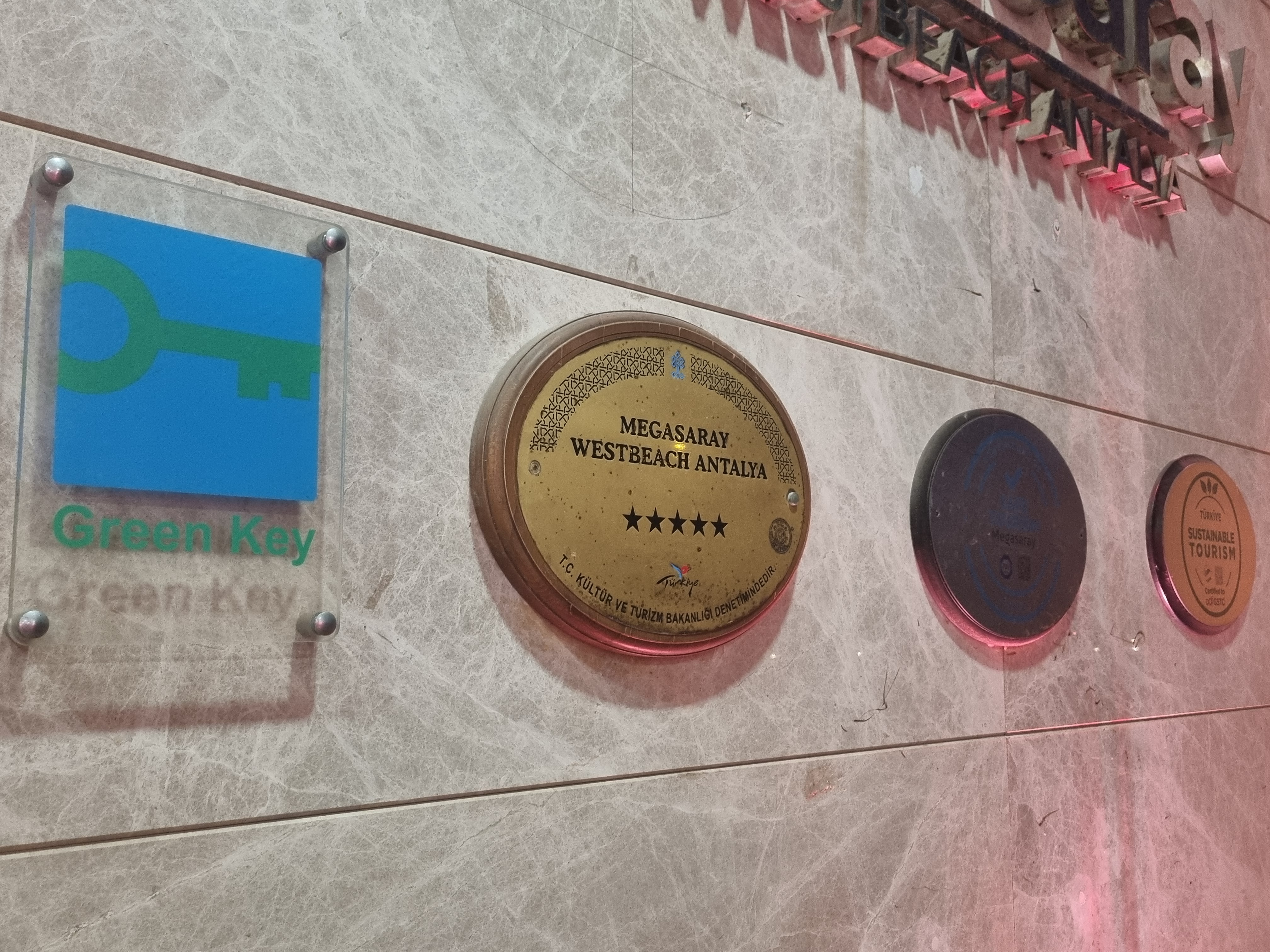
The list is rounded out by global organisations like Green Globe, which certifies travel and tourism businesses worldwide based on GSTC criteria. You’ll often see this seal in the Caribbean, for example, at sustainable luxury hotels in Jamaica or the Bahamas. If you’re travelling to more exotic or tropical destinations, you’ll frequently spot accommodations with the Rainforest Alliance green frog logo, which guarantees biodiversity conservation and fair livelihoods for local tribes and workers at Costa Rica’s rainforest lodges or eco-centres in Indonesia.
Finally, keep an eye out for the B Corp certification, which, although not exclusive to tourism, demands the highest levels of social and environmental transparency from companies. For instance, the globally renowned adventure travel company Intrepid Travel proudly holds this recognition. The list concludes with the TourCert system, which certifies responsible tourism and fair trade practices, widely used by community-based tourism projects and sustainable local travel organisers in South America, such as in Ecuador and Peru.
With I-DEST, you don’t need to get lost in the details of certifications. Use our filters, avoid greenwashing, and support providers that demonstrably contribute to the future of our planet and local communities this summer!
How Do Green Certifications Relate to the UN’s SDG Goals?

When an accommodation or destination earns one of the GSTC-based certifications mentioned above, it not only boosts tourists’ trust but also directly contributes to the UN’s SDG (Sustainable Development Goals) framework. The UN has outlined 17 global goals to eradicate poverty, protect the planet, and ensure prosperity, and tourism is one of the few sectors that impacts nearly all of them.
A certified eco-hotel or destination’s operations most directly support the following specific goals. Water and energy efficiency measures are directly linked to Clean Water and Sanitation (SDG 6) and Affordable and Clean Energy (SDG 7). When a certification – such as Rainforest Alliance or TourCert – requires fair wages for local workers and the inclusion of local producers, it supports Decent Work and Economic Growth (SDG 8). Additionally, waste-free operations and the elimination of plastics are the cornerstone of Responsible Consumption and Production (SDG 12), while protecting beaches (Blue Flag) and rainforests aligns with Life Below Water (SDG 14) and Life on Land (SDG 15). Green certifications thus translate the UN’s global vision into practical, measurable tools in the language of tourism.
The Role of ESG Principles in the Tourism Sector
Sustainability is no longer just a moral issue or marketing tool but a serious corporate governance and investment criterion regulated by the ESG (Environmental, Social, Governance) framework. In the international tourism market and hospitality industry, investors, corporate partners, and increasingly conscious business travellers are demanding transparent ESG reports. The presence of green certifications serves as direct evidence that a provider meets these stringent requirements.
In the Environmental (E) pillar, systems like Bioscore or EarthCheck provide precise, audited data on a hotel’s carbon emissions, energy, and water usage, which are essential for ESG reporting. The Social (S) aspects focus on human rights, working conditions, and impacts on local communities. Certifications like the Good Travel Seal ensure that tourism revenues are fairly distributed and that accommodations respect local cultural identity. Finally, the Governance (G) pillar emphasises transparency, anti-corruption, and responsible leadership. Third-party verified GSTC certifications and Travelyst partnerships provide the credibility and legal-ethical compliance that protect tourism businesses and booking platforms from the risks of greenwashing while creating long-term value in the market.
More News
All-
5 Mins

Read -
3 Mins

Read -
4 Mins

Read -
3 Mins

Read -
3 Mins

Read -
3 Mins

Read -
12 Mins

Read -
4 Mins

Read -
4 Mins

Read -
4 Mins

Read -
4 Mins

Read -
5 Mins

Read -
4 Mins

Read -
3 Mins

Read -
8 Mins

Read -
4 Mins
Read -
6 Mins

Read -
4 Mins

Read -
5 Mins

Read -
6 Mins

Read -
5 Mins

Read -
3 Mins

Read -
7 Mins

Read -
7 Mins

Read -
5 Mins

Read -
6 Mins

Read -
6 Mins

Read -
3 Mins

Read -
3 Mins

Read -
10 Mins

Read -
6 Mins

Read -
5 Mins

Read -
4 Mins

Read -
5 Mins

Read -
4 Mins

Read -
6 Mins

Read -
7 Mins

Read -
5 Mins

Read -
3 Mins

Read -
4 Mins

Read -
4 Mins

Read -
4 Mins

Read -
6 Mins

Read -
3 Mins

Read -
1 Mins

Read -
2 Mins

Read -
2 Mins

Read -
3 Mins

Read -
3 Mins

Read