
Arch of Constantine
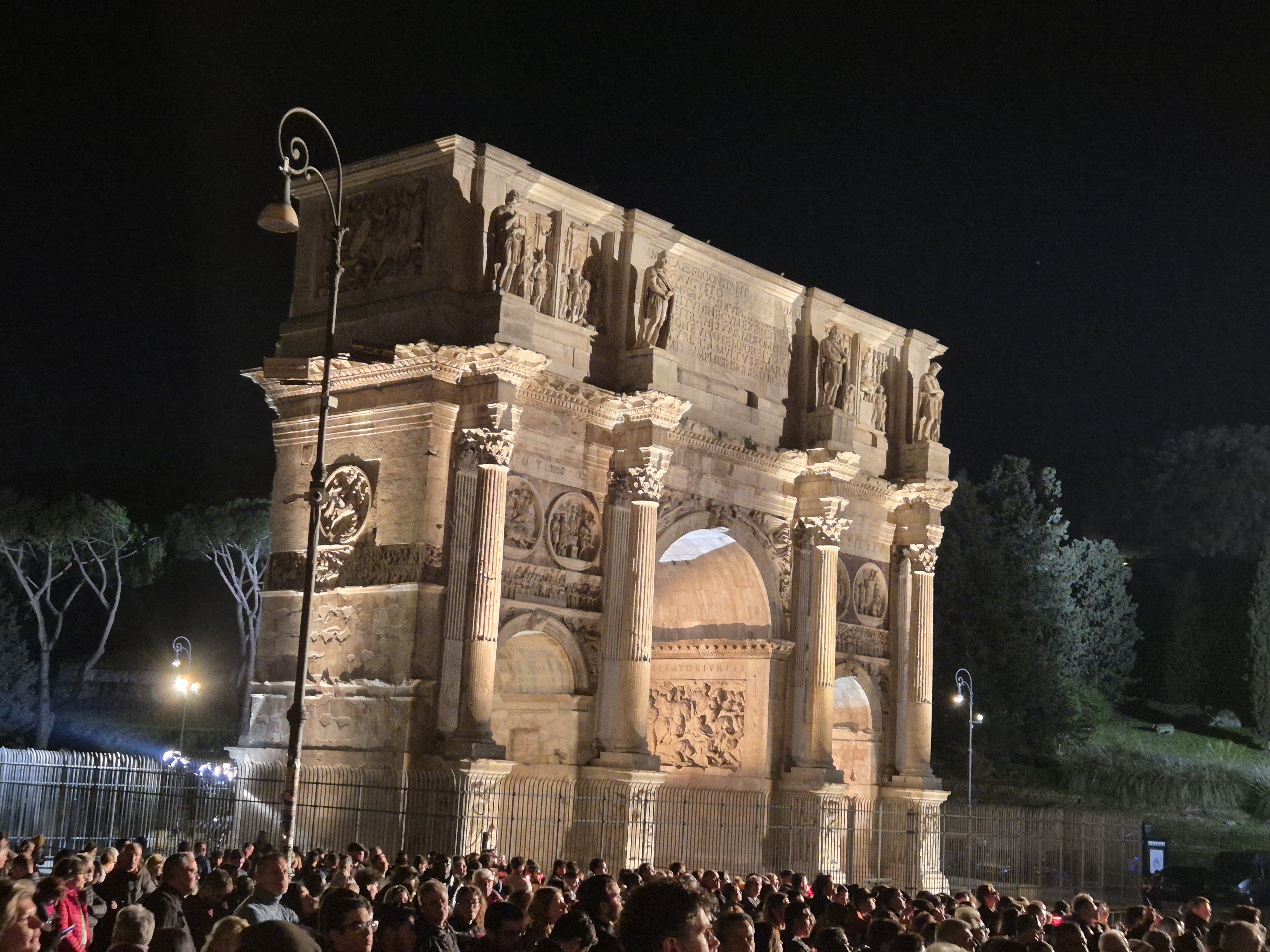
Standing right next to the Colosseum, this is Rome's largest and best-preserved triumphal arch. The monumental three-arched gateway not only commemorates a victorious battle but also marks a turning point in history: it is the last major structure erected by the Roman Empire, still following pagan rituals but already at the dawn of Christianity.
Victory at the Milvian Bridge
The arch was commissioned by the Roman Senate and people in AD 315 to honour Emperor Constantine the Great's tenth year of reign. It was inspired by his victory over Maxentius in the Battle of the Milvian Bridge in 312. This battle was a turning point, as legend has it that Constantine saw a cross in the sky before the battle with the inscription "In this sign, you will conquer," which later led to Christianity becoming the state religion.
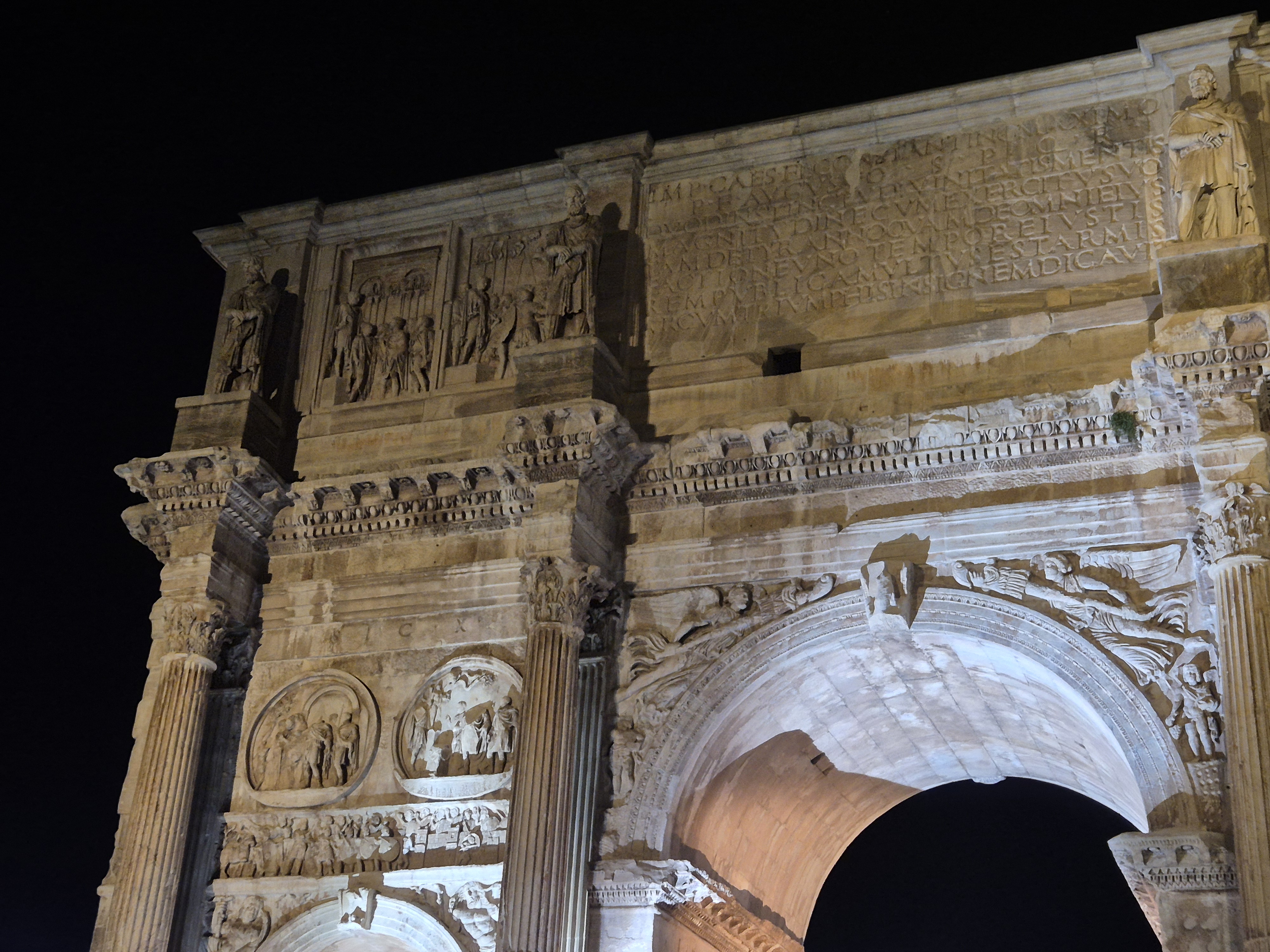
The structure is notable for its use of the so-called spolia technique: much of the arch's decoration was "borrowed" from monuments of earlier great emperors (Trajan, Hadrian, and Marcus Aurelius). This was not merely a matter of expediency but also a political statement: Constantine sought to present himself as the rightful heir to the great rulers of the golden age.
What to look out for?
The arch is an open-air history book where different artistic styles from various eras converge:
-
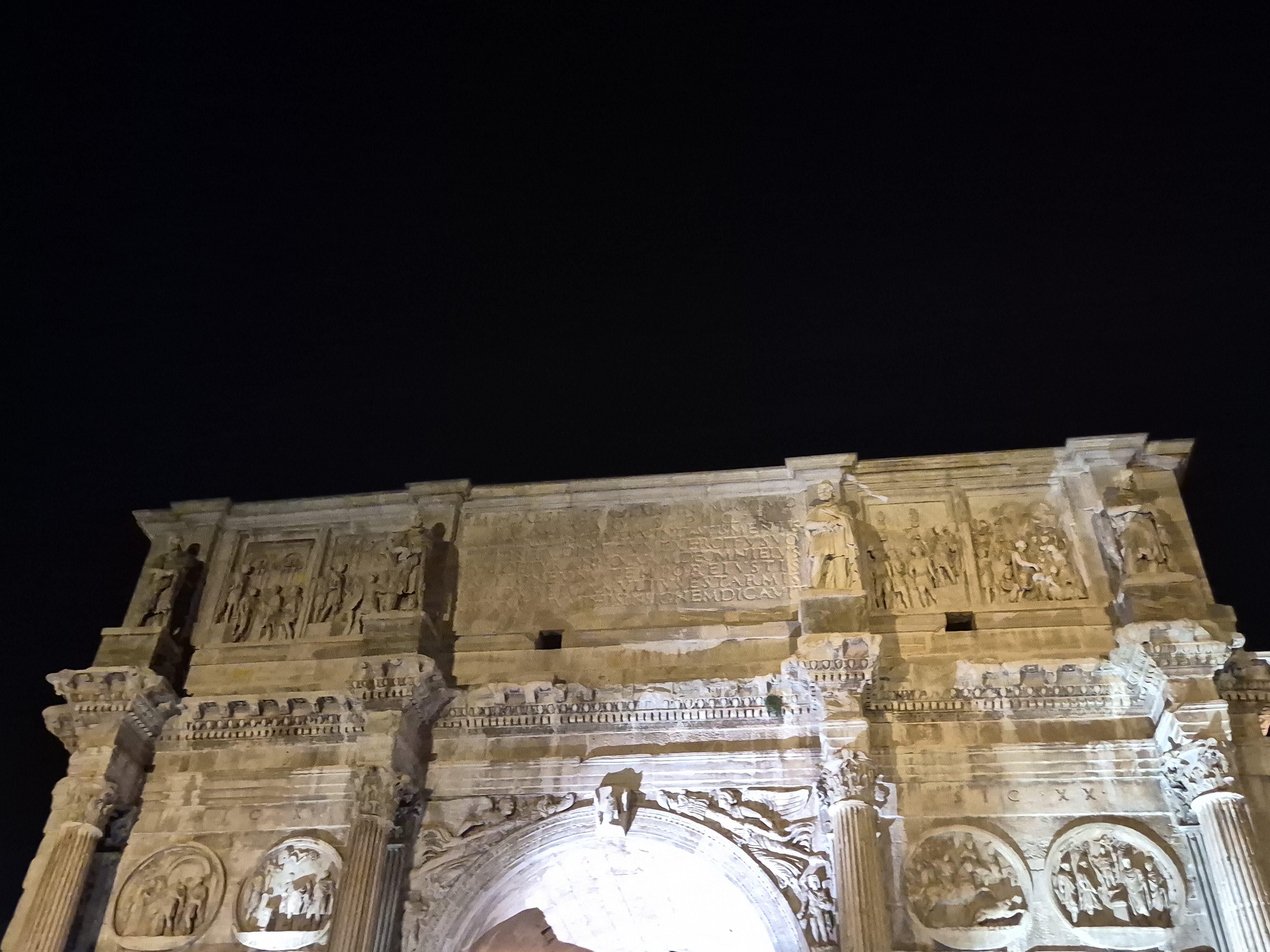
The reliefs: The upper sections depict Trajan's wars against the Dacians, the circular medallions show Hadrian's hunting scenes, and the rectangular panels illustrate Marcus Aurelius's acts of generosity.
-
Constantine's frieze: The narrow band above the arches reflects the distinctive style of Constantine's era: simpler, more rigid figures that hint at the early medieval artistic approach.
-
The inscription: The Latin text above the central arch subtly refers to the "divine inspiration" that aided the emperor's victory – a diplomatic phrasing that resonated with both Christians and pagans.
Sustainability and mindful tourism
Although the arch can be visited for free, its preservation poses significant environmental challenges.
-
Cultural upcycling: The arch is an example of ancient sustainability. The reuse of old sculptures and stones reduced the need for new raw materials (marble) as far back as 1700 years ago.
-
Air quality and preservation: The arch's greatest enemy is urban smog. The Roman authorities have turned the area around the Colosseum into a low-traffic zone to minimise the chemical erosion (the "black crust" formation on marble) caused by exhaust fumes.
-
Mindful visiting: As the monument can be walked around, please avoid touching the carvings. Oils and acids from our hands can cause long-term damage to the stone.
-
Eco-friendly access: The arch is a 2-minute walk from the Colosseo stop on Metro Line B. We recommend arriving on foot or by shared bike to avoid the area's congested road traffic.
- Editorial content -
Target group
-
Class trips
-
Families with younger children
-
Families with older children
-
Multigenerational programs
-
Friends
-
Seniors
-
Couples