
Hungarian Museum of Trade and Hospitality
Located in District III of Budapest (Óbuda), at 1 Korona Square, the Hungarian Museum of Trade and Hospitality (MKVM) is the only specialised museum in the country that collects, organises, and presents the artefacts and history of domestic and international trade, hospitality, tourism, and the hotel industry. The museum is housed in the former Krúdy House, a 19th-century architectural monument combining classical and Art Nouveau elements, which is a valuable piece of architecture in its own right.
- SZÉP card accepted
- Cash
- Bank card accepted
- Paid parking available
Permanent Exhibitions
The museum's two main areas of collection are presented through separate yet interconnected permanent exhibitions that focus on authentic reconstructions of period spaces rather than chronological storytelling.
“A Good Merchant is the Benefactor of the World” – The History of Trade
This exhibition traces the development of Hungarian trade from the decline of the guild system, through the phases of abundance during the Austro-Hungarian Dual Monarchy, to the mid-20th century.
-
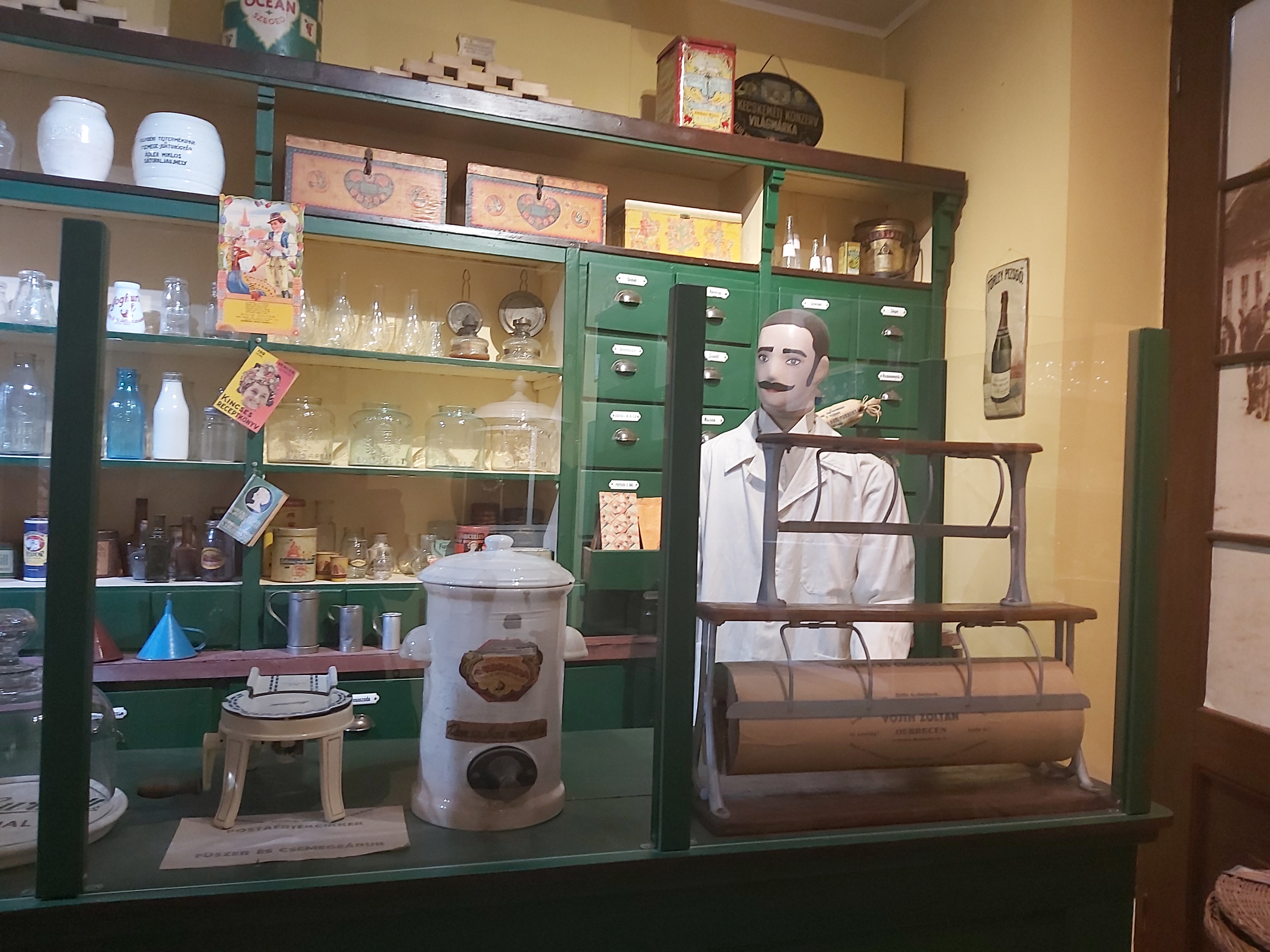
Period Shop Interiors: The core of the exhibition consists of fully furnished shops with original furniture and stock. Visitors can see a turn-of-the-century colonial goods store (spice shop), a classic fashion boutique, and a period chemist's shop.
-
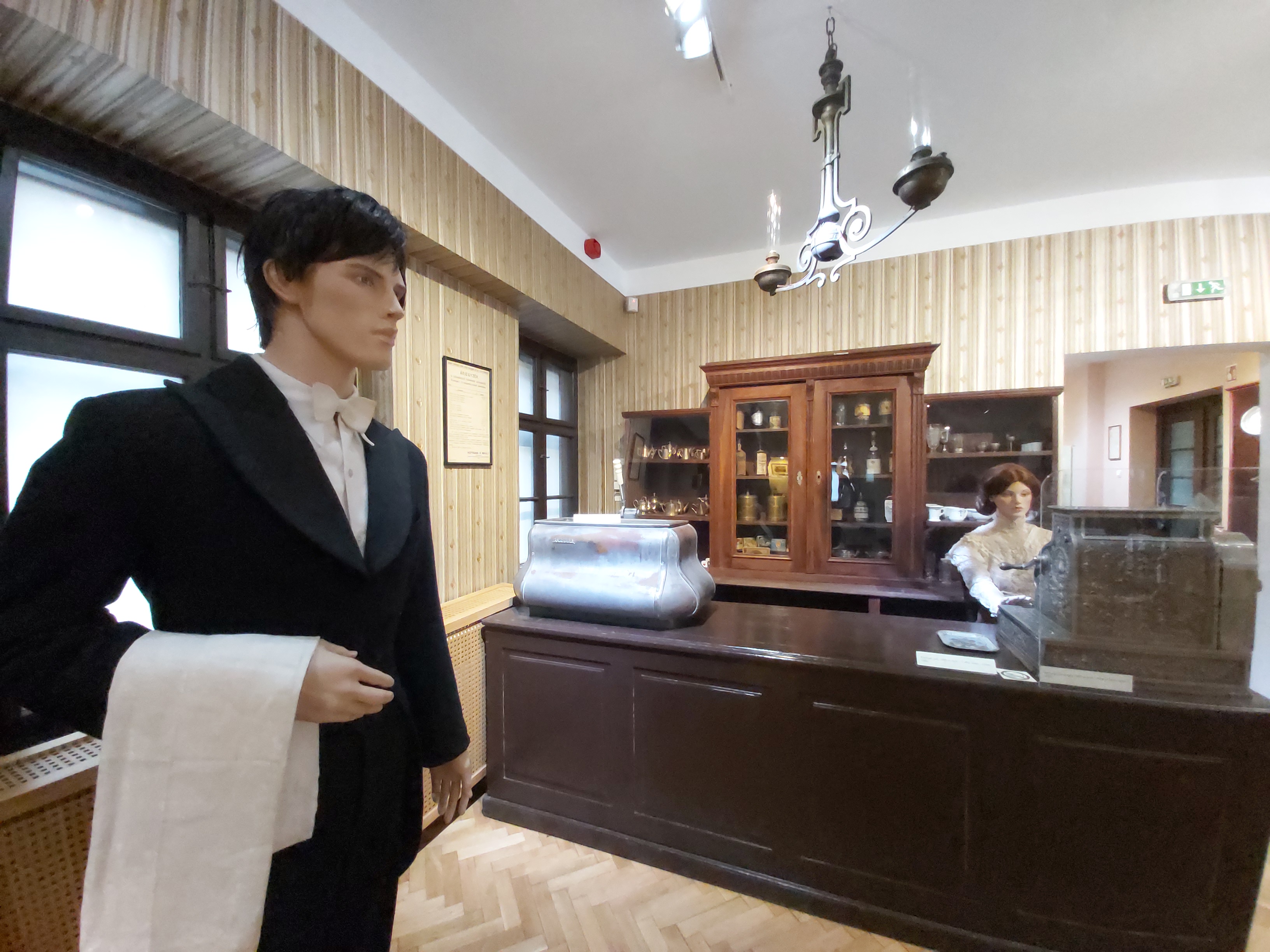
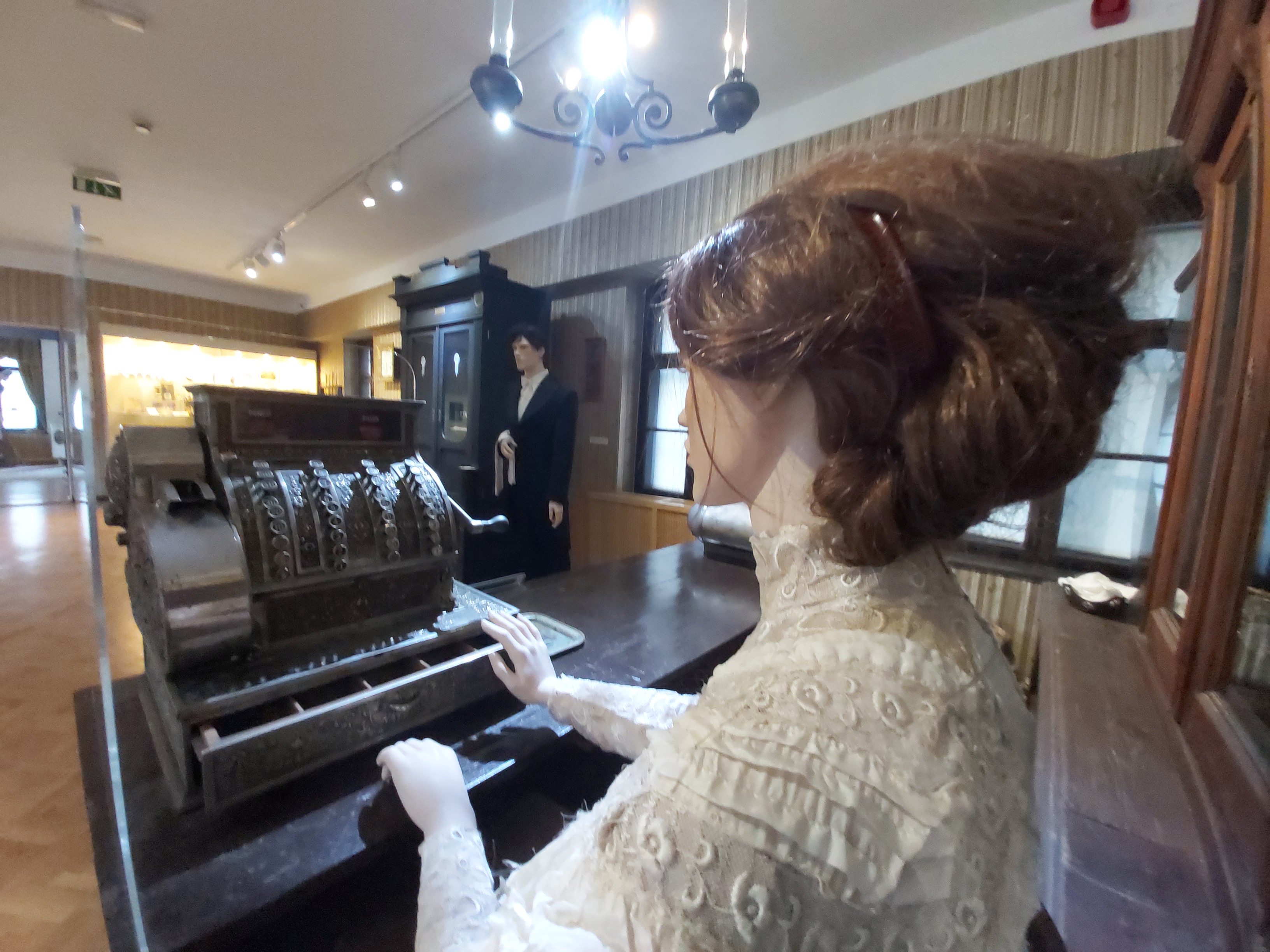
Tools of Modernisation: Early scales, the first mechanical cash registers, enamel signs of advertising significance, posters, and the evolution of packaging techniques from ornate tin boxes to paper bags are all on display.
“Hosting Guests, Being a Guest” – The History of Hospitality
This section showcases the golden age of Hungarian confectionery, café culture, the hotel industry, and restaurant hospitality (1867–1914), as well as the interwar period.
-
Café Culture: Visitors can step into the salon of a period Pest café, where they can view iconic Thonet chairs, marble tables, billiard tables, and period newspaper readers.
-
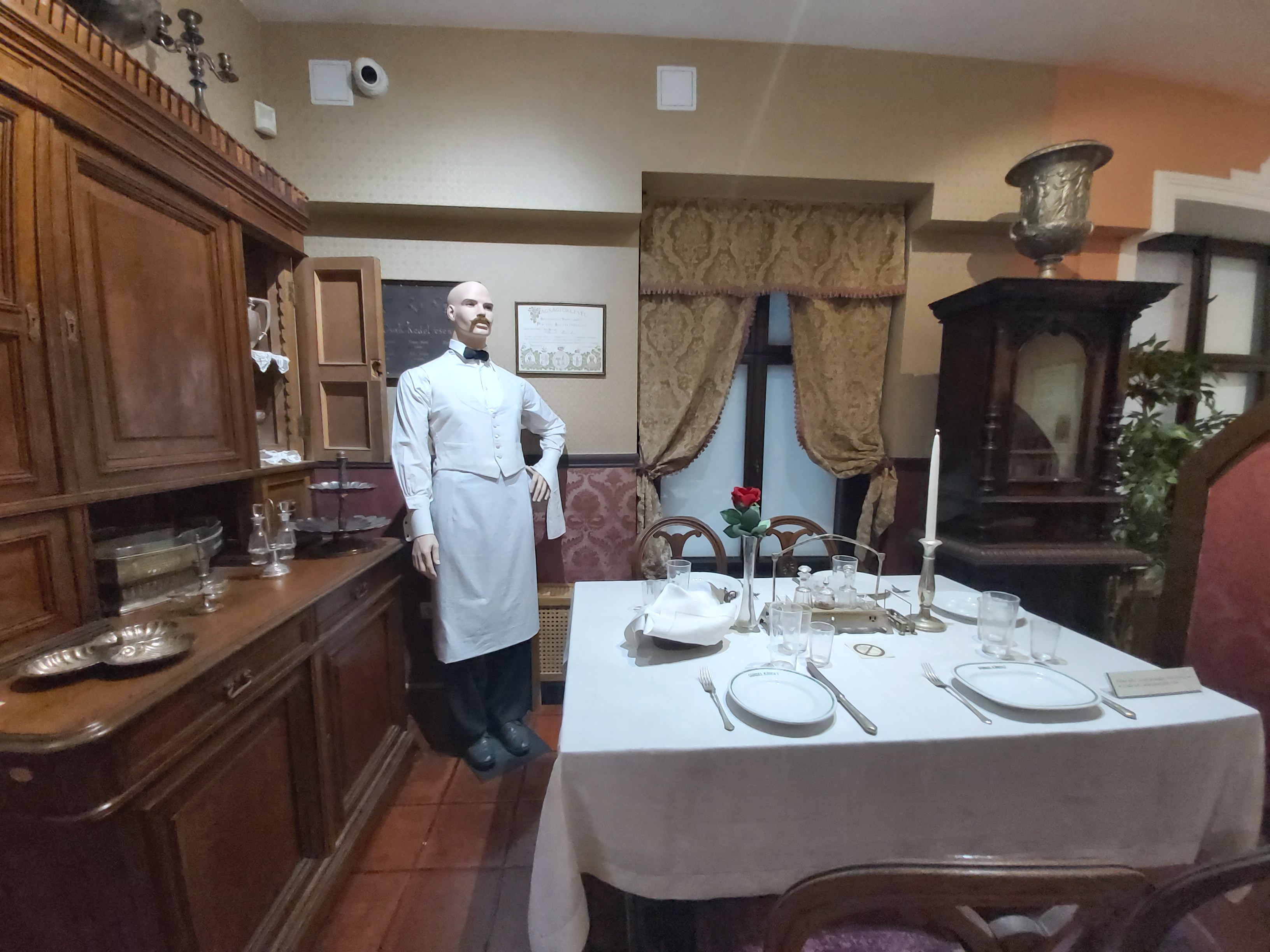
Hotels and Gastronomy: The exhibition includes the interior of a late 19th-century luxury hotel, a period restaurant kitchen, and machines used in confectionery workshops (such as ice cream makers and marzipan moulders). A separate section explores more everyday forms of hospitality, such as suburban pubs with chequered tablecloths and beer halls.
Gyula Krúdy Memorial Room
As Gyula Krúdy, one of the most significant figures in 20th-century Hungarian prose, spent the last years of his life (1930–1933) in this building, the museum maintains a permanent literary memorial room. The exhibition showcases the writer's personal belongings, manuscripts, and furniture, as well as Krúdy's connection to gastronomy, evoking the famous dining scenes from his works.
Why Do We Recommend It?
The MKVM is an ideal destination for visitors who prioritise environmentally conscious and sustainable tourism.
-
An Alternative to Overtourism: Due to its location, the museum is outside the densely visited and overcrowded downtown tourist zones. It offers a high-quality cultural experience in a calm and quiet environment, reducing the pressure on the city centre.
-
Local Identity and Cultural Preservation: The exhibitions are closely tied to the everyday history of local communities and the traditions of Hungarian industry and craftsmanship. The museum actively supports the preservation of local gastronomic culture and crafts through thematic workshops and events.
Visiting and Additional Activities
-
Accessibility: The building and exhibition spaces are fully accessible for visitors with reduced mobility or those with pushchairs.
-
Eco-Friendly Access:
-
Suburban Railway (HÉV): Take the Szentendre (H5) line to Szentlélek tér station, then walk 3 minutes.
-
Tram: Take tram lines 17, 19, or 41 to Szentlélek tér station.
-
Bus: Take bus lines 9, 29, 109, 111, 137, 218, or 237 to Szentlélek tér or Flórián tér stops.
-
-
Combined Programmes: Due to its location, a visit to the museum can be combined with exploring the historic Baroque buildings of Óbuda’s Main Square, visiting the Óbuda Museum, or taking a walk along the Danube and on Hajógyári Island.
- - Editorial Content -
Target group
-
Class trips
-
Families with younger children
-
Families with older children
-
Multigenerational programs
-
Friends
-
Seniors
-
Couples
Other services
Sights, programs
All
Parking information
- Paid parking available